When comparing copy paper vs printing paper, many businesses are trying to decide which paper is suitable for everyday office use, routine documents and regular printing needs.
In many office settings, the terms are used interchangeably. However, differences in paper weight, finish and usage can still affect print quality, cost and procurement planning.
Businesses looking for commonly used workplace paper formats may explore our office printing paper options for A4, A3 and A5 paper suitable for different operational needs.
Table of Contents
- What Is Copy Paper?
- What Is Printing Paper?
- Copy Paper vs Printing Paper: Key Differences
- Which Paper Is Better for Office Use?
- Why Paper Weight Still Matters
- How Paper Choice Affects Cost and Procurement
- Common Mistakes Businesses Make When Choosing Paper
- Reliable Paper Supply for Business Operations
- Final Thoughts
What Is Copy Paper?

Copy paper usually refers to standard paper used for everyday office printing and photocopying. It is commonly used in printers, copiers and multifunction office machines.
Typical copy paper uses include:
- internal documents
- invoices
- forms
- receipts
- meeting notes
- drafts
- basic reports
- administrative records
For most businesses, copy paper is expected to be practical, smooth enough for regular printing and suitable for high-volume use.
Copy paper is often associated with standard A4 paper because A4 is the most common paper size used in offices. Businesses with regular document printing needs may consider keeping a steady supply of A4 paper supplies for daily operational use.
What Is Printing Paper?
Printing paper is a broader term. It can refer to paper used for office printing, commercial printing, document printing or printed materials that require a certain finish or presentation quality.
Depending on the context, printing paper may include:
- standard office paper
- copy paper
- thicker document paper
- coated or specialty paper
- paper for flyers or marketing materials
- paper used for reports or presentation documents
For daily office use, printing paper may simply mean paper suitable for printers. However, in more specific contexts, it may refer to paper chosen for better print quality, appearance or durability.
This is why businesses should not rely only on the label. It is more useful to look at the paper size, GSM, quantity, finish and intended purpose.
Copy Paper vs Printing Paper: Key Differences
The difference between copy paper vs printing paper depends on how the terms are being used. In everyday office procurement, they often overlap. However, there are a few practical differences businesses should understand.
1. Usage Purpose
Copy paper is usually used for routine office tasks. It is suitable for documents that need to be printed, copied, filed or distributed internally.
Printing paper can be broader. It may include everyday office paper, but it can also refer to paper used for documents where presentation matters more.
For example:
- copy paper → internal forms, drafts, admin documents
- printing paper → reports, customer documents, presentation copies, printed materials
2. Paper Weight
Paper weight is one of the clearest factors to compare. Standard office paper often comes in 70gsm or 80gsm options.
A lighter paper may be suitable for high-volume internal use, while a slightly heavier paper may feel better for documents that need to look more presentable.
Businesses comparing paper weight may refer to our 70gsm vs 80gsm paper comparison for a clearer breakdown of how GSM affects office printing.
3. Print Quality
For basic black-and-white printing, standard copy paper is usually sufficient. For documents with images, graphics or external presentation value, businesses may prefer slightly better printing paper.
Print quality may depend on:
- paper smoothness
- paper thickness
- printer type
- ink or toner coverage
- document purpose
For most office environments, the goal is not to buy the most premium paper. The goal is to choose paper that performs reliably for the documents being printed.
4. Cost Efficiency
Copy paper is often chosen for cost efficiency because it is used frequently. Printing paper may cost more if it is thicker, smoother or designed for better presentation.
For businesses that print regularly, even small differences in paper cost can add up over time. A more detailed breakdown of pricing factors can be found in our guide on A4 paper price in Singapore.
Which Paper Is Better for Office Use?
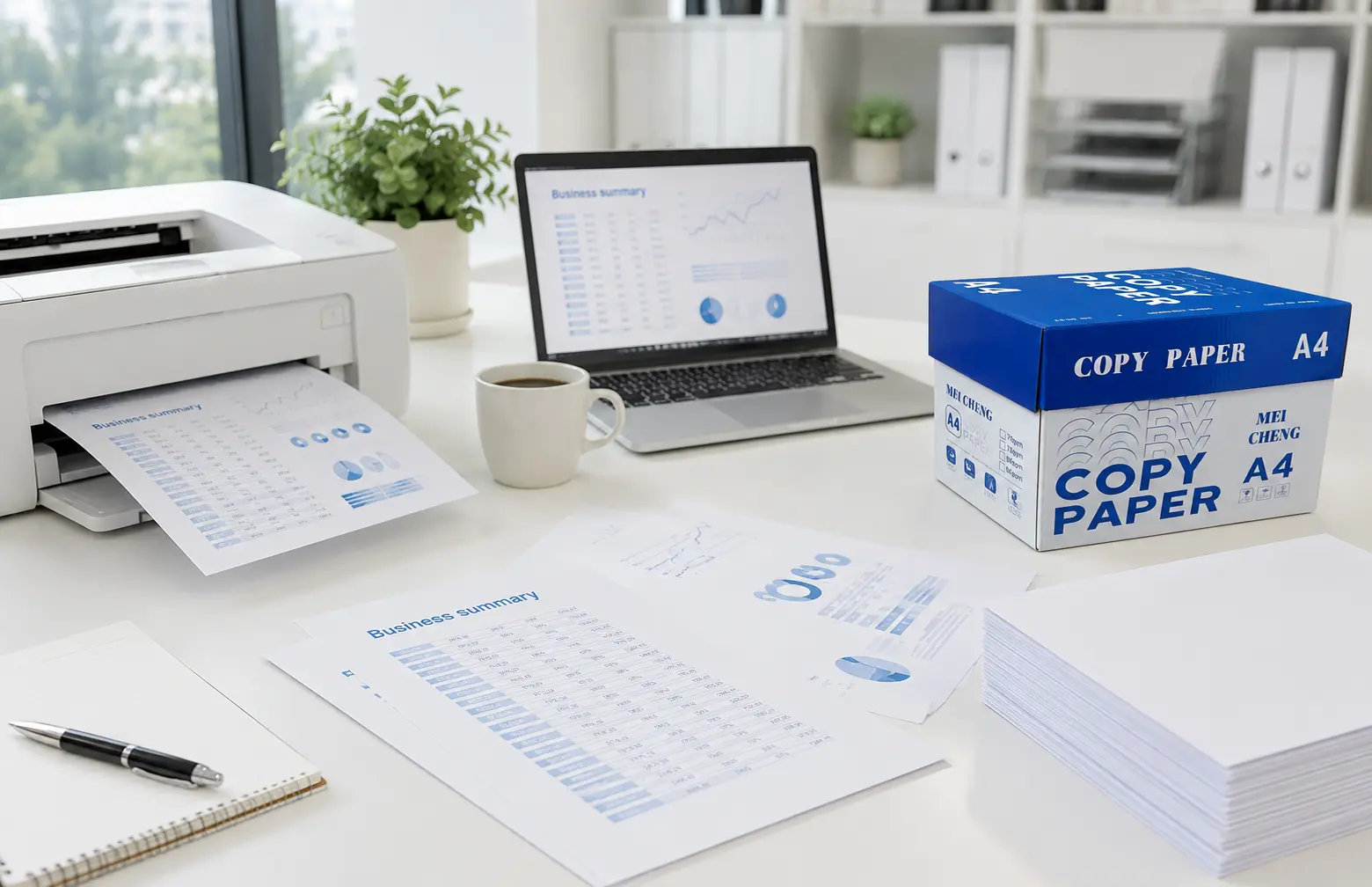
For most daily business operations, standard office copy paper is suitable. However, the best option depends on what the paper is used for.
Use Copy Paper For
Copy paper is usually suitable for:
- internal documents
- drafts
- forms
- invoices
- checklists
- delivery orders
- routine administrative printing
It is a practical choice when print volume is high and the document does not require special finishing or premium presentation.
Use Higher-Quality Printing Paper For
Printing paper may be more suitable for:
- external reports
- client-facing documents
- presentation copies
- documents with graphics
- materials that need a more professional feel
This does not always mean businesses need expensive specialty paper. In many cases, choosing the right GSM and paper consistency is enough.
Match the Paper to the Document
A practical approach is to match paper choice to document purpose.
For example:
- high-volume internal printing → standard copy paper
- everyday office documents → 70gsm or 80gsm A4 paper
- client-facing documents → slightly heavier or smoother paper
- larger layouts → A3 paper
- compact inserts or forms → A5 paper
For teams using different document formats, A3 paper for larger-format printing and A5 paper for compact documents can support more specific printing needs.
Why Paper Weight Still Matters
Paper weight is one of the main factors that affects how copy paper and printing paper perform in daily office use. For standard office printing, common options include 70gsm and 80gsm paper.
In general:
- 70gsm paper is often used for routine internal printing where cost control matters
- 80gsm paper may feel slightly thicker and is commonly used for everyday business documents
- higher GSM paper may be used when presentation quality is more important
For this article, the key point is simple: copy paper and printing paper should not be judged by name alone. Businesses should also consider paper weight, printer compatibility and document purpose.
For a more detailed breakdown, you may refer to our 70gsm vs 80gsm paper comparison, which explains how paper weight affects office printing performance.
How Paper Choice Affects Cost and Procurement
For businesses, paper choice is not only a printing decision. It is also a procurement decision.
Choosing the wrong paper can lead to:
- unnecessary reprinting
- paper jams
- inconsistent document quality
- higher long-term costs
- last-minute purchasing
- poor stock control
For organisations with regular printing needs, buying by the box or in bulk may be more practical than repeated small purchases. This helps reduce ordering frequency and supports more consistent stock levels.
For businesses comparing longer-term purchasing options, our guide on A4 paper wholesale in Singapore explains how bulk buying can support more stable procurement.
A future guide on how much paper an office uses per month can also help businesses estimate stock levels and reordering cycles more accurately.
Common Mistakes Businesses Make When Choosing Paper
Even simple paper choices can create issues when the paper does not match the actual printing purpose.
Matching Paper to the Wrong Use Case
Using one paper type may be convenient, but it may not always be efficient. Internal drafts, customer-facing documents, forms and presentation copies may not require the same paper quality.
For example:
- internal drafts may only need standard copy paper
- routine office documents may suit 70gsm or 80gsm paper
- client-facing documents may benefit from slightly better printing paper
- larger layouts may require A3 paper
- compact documents may work better with A5 paper
Ignoring Paper Weight
Some businesses focus only on whether the paper is called copy paper or printing paper. However, paper weight can affect how the paper feels, feeds through printers and performs during daily use.
For a more detailed explanation, refer to our 70gsm vs 80gsm paper comparison, which explains how paper weight affects office printing performance.
Choosing Suitable Copy Paper and Printing Paper for Office Use

After comparing copy paper vs printing paper, the most practical next step is to choose paper based on how it will be used. For most offices, standard paper for everyday printing is sufficient, while documents that need better presentation may require slightly thicker or smoother paper.
Businesses sourcing paper for routine office use may explore our copy paper and printing paper options for commonly used workplace paper formats.
For offices that mainly print invoices, forms, reports and internal documents, comparing available A4 paper supplies can help maintain a more consistent supply of standard office paper.
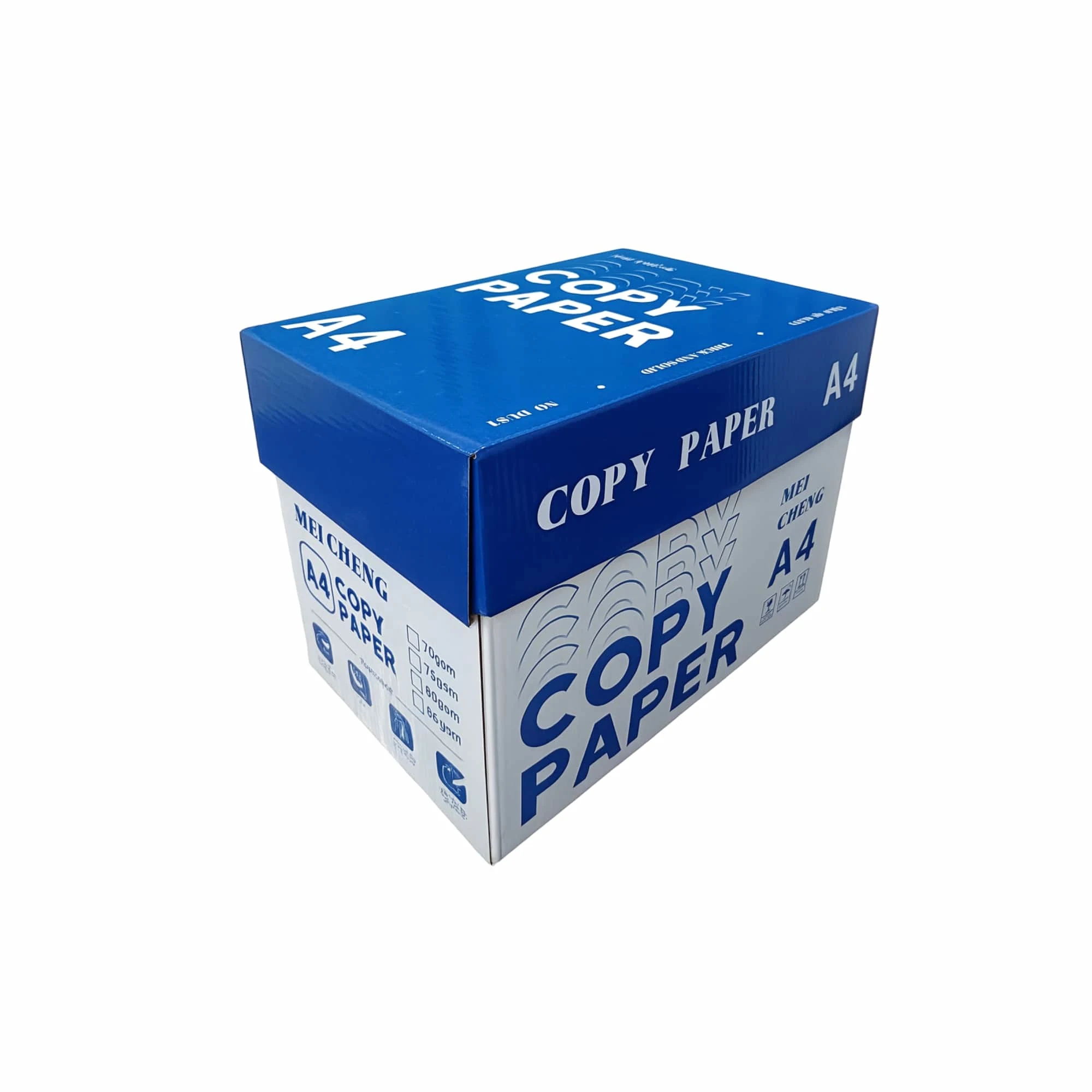
For smooth and dependable everyday document printing, organisations may also consider Mei Cheng A4 paper for routine operational needs
Final Thoughts
Understanding copy paper vs printing paper helps businesses make better purchasing decisions based on actual document needs, rather than relying only on general paper labels.
For most offices, standard copy paper is suitable for everyday printing, while printing paper may refer to broader paper options used for different quality, size or presentation requirements.
By reviewing paper size, GSM, usage volume and purchasing frequency, businesses can choose paper more efficiently and reduce unnecessary procurement issues over time.
For businesses looking to streamline paper supply, reaching out via WhatsApp can be a practical next step to check current stock availability, suitable paper formats, bulk pricing and delivery arrangements.